Written by: Alex LaMotte
Published: November 9, 2024
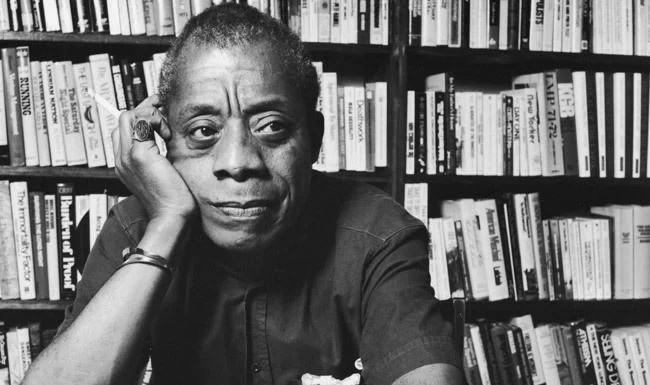
Photo Credit
Image of James Baldwin, courtesy of alchetron.com. Image free to modify, share and use commercially.
Scholar Katia Costa-Santos gave an informational Zoom presentation Tuesday, Nov. 5 on American, queer writer James Baldwin.
“He supported black men in a way that nobody has ever seen. I want to bring this voice into this conversation, and I want to share his findings of his style that are still important to us.”
~ Scholar Katia Costa-Santos
The Interdisciplinary and Professional Studies Department at the University of Miami sponsored the event, known as The Centennial of James Baldwin, showcasing Baldwin’s life of prolific writing and activism on the black diaspora.
There were multiple speakers that provided context into his life as a Black, queer man, including Costa-Santos, a Brazilian scholar specializing in writing specifically by all black women, Gabriel Das Chagas, a PhD student from the University of Miami studying race, gender, and transnational studies who organized the event, and members of the Queer Studies Interdisciplinary
Research Group at the University of Miami, Elizabeth Cornick and Ra Bacchus.
The event was smaller in size with about 40 participants, including many University of Miami students and other members of the University of Miami Queer Studies and Racial Studies Departments. Many of the participants were international, given the seminar took place over Zoom, which allowed for a calmer, more relaxed session. Many of the topics brought up in this seminar included Baldwin’s interactions with fellow playwrights and writers, including Lorraine Hansberry, Nikki Giovanni, and Audre Lorde, as well as his family members, specifically his relationship with his uncle. The speakers mentioned many of Baldwin’s works, including “Go Tell It on the Mountain” and Hansberry’s “To Be Young, Black, and Gifted,” where he included his own introduction. The seminar ended with a discussion on Baldwin and his improvisation abilities, as well as remarking on his capability to cloak his sexuality during his conversations.
“I designed this event with the intention of a transnational perspective,” said Das Chagas. “The idea to come up with this event started last year. James Baldwin was born in 1924, was an amazing writer, thinker, and addressed racial and gender issues across the world. He evokes in his works several different issues that are still contemporary, including social issues such as mass incarceration, racial injustice, and LGBTQ+ rights.”
“He was someone that was considered ‘Martin Luther Queen.’”
~ Dr. Gabriel Das Chagas
Interview with Dr. Gabriel Das Chagas
LaMotte: Is there a reason you hosted [the session] on Zoom just in general? Since someone from Colorado like myself just found the event scouring the internet, did you know that could have been a possibility?
Das Chagas: Yes, actually. I was hoping that that could be a possibility and I’m happy that it happened. I was very happy to receive your message, it was very nice to hear from you knowing that you are so far away and yet you still attended. I first decided to do it on Zoom because I wanted speakers in other countries. As I said, there was a scholar from Brazil but also because I wanted the audience to be more diverse, and we already have plenty of nice, in-person events so I thought this one that could be online would be more interesting. As I said, around 20 were from [my] class and the other 20 I only knew some of them. I didn’t know some others like you for example, so it was good to see names that I couldn’t identify. We also combined and joined with the queer studies interdisciplinary group, so they brought four or five people from their side. The idea of doing it on Zoom was mainly because I wanted to make all of this just as diverse as possible.
LaMotte: When did the planning of the event start? How long in advance did you have to get everybody together?
Das Chagas: During the summer, everything was already prepared. I had the idea first in the spring semester around February before spring break. I talked to my boss, and she’s super, super nice and supportive. And I told her, “We have the Centennial coming soon and I really want to do something, that our students need to know more, etc…” And she was like, “Oh, that’s great!” So our first idea was doing it in person because we wanted to screen the movie “If Beale Street Could Talk.” It’s a beautiful movie and it’s based on James Baldwin’s novel, and I was already planning on assigning this movie for my fall class and I actually did. So I thought maybe we can screen the movie and then invite people to talk about the movie and then we start thinking about that.
The logistics of these kinds of events sometimes seem simple but it’s not because there are other things involved, right? I already organized much bigger conferences with many people from many countries and of course, it’s much more work. But even small events you need to coordinate everything to be sure that everything will be alright. For example, to screen the movie, we need to get a license because if it’s at UM you need a special license to go to Amazon Prime and do all the things, etc. We also needed a room, to offer food and drinks to be polite, and we needed to find people who could be there.
 Alex LaMotte